
Henrico County Neighbor Record Sources
Land records beat a name list. In Henrico County they cover recorded ownership, parcel shape, association identity, and a little civic detail. They stop short of a block roster. So work parcel-first. Pin the subject parcel, then the adjoining polygons, then their parcel keys. Use a deed or assessor record only to verify one specific claim. A shared line can even be a road, drainage tract, or condo common area, so treat “next door” as a map fact rather than a statement about households.
| Block source | What it can establish | Access route |
|---|---|---|
| Henrico GIS | Parcel geometry, GPIN, subdivision, lot, condominium, and appraisal-area context | Viewer and RealEstate MapServer |
| Assessment search | Address- or parcel-keyed assessment record | Street parts, GPIN, or PID search |
| SRA and clerk records | Recorded instrument, parties, date, legal description, book or page | Index, image route, or Record Room |
| HOA lookup and SCC | Mapped association identity and entity-office route | Address lookup, then SCC entity record |
| Historic directories | Earlier street or household clue tied to a year | Library and archival collections |
A tax-roll mailing address is only a contact clue. Recorded owners are often not occupants. Hold those distinctions firm when tracing Henrico County neighbors, and never stitch scattered results into a roster of who lives on the block now.
Henrico County GPIN Connection
The GPIN, or PID, ties everything together. One key links a street address, the assessment search, the GIS map, and the recorded land trail. Start with what you know. The assessment form accepts Street #, Prefix, Street Name, Unit, GPIN, or PID. There is no owner-name field. An address or known parcel key opens it better. Carry the GPIN into GIS, along with the subdivision and lot when shown, before searching a deed by parties or legal description. The Henrico RealEstate MapServer documents the parcel, condominium, subdivision, section, and appraisal-area layers behind this kind of block work.
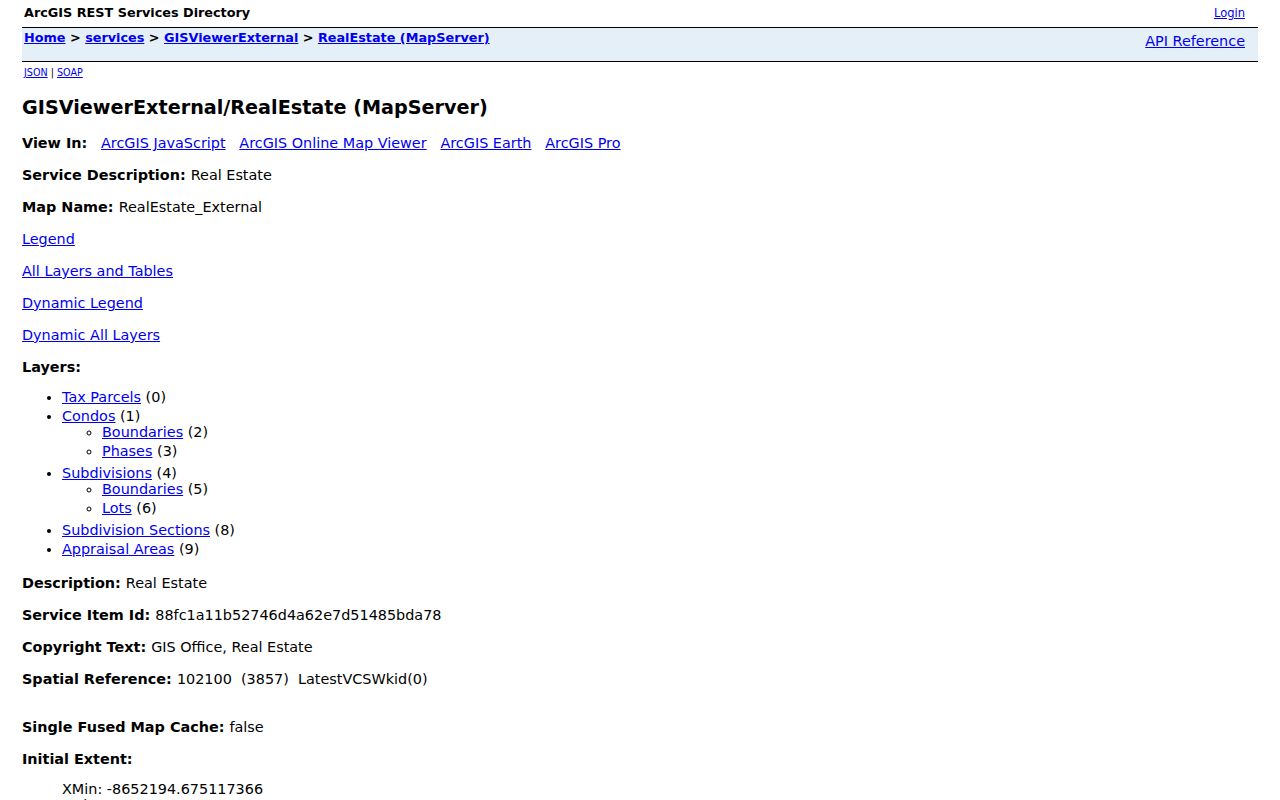
The visible parcel key anchors each adjoining polygon. Treat the map as a reference, and let a recorded instrument settle any question of title.
Mapping Henrico County Neighbor Parcels
Henrico’s Public GIS Viewer rewards an address-first approach. Its RealEstate MapServer carries a Tax Parcels layer plus separate layers for condo boundaries and phases, subdivisions and lots, subdivision sections, and appraisal areas. Record the features that explain the link. A visual impression is not enough. One old tract can also split into several lots, which makes the subdivision plat and legal description vital for continuity.
- Enter the subject address in the Henrico Public GIS Viewer and identify its parcel polygon.
- Click or query the touching and nearby polygons. Record the GPIN, street frontage, subdivision or lot, layer notes, and any common-area or condominium designation.
- Use the assessment record for each GPIN or PID. Keep the assessment display separate from a conclusion about current occupants.
- Search SRA for the relevant recorded instrument. Compare party role, instrument number, recording date, book or page, and legal description before describing ownership.
The flow stays small. It runs address → parcel → GPIN → adjacent parcel → assessment → recorded instrument. The Henrico County street directory covers the whole-street method.
Henrico County Neighbor Voter Limits
Virginia opens only part of its voter list to public inspection. You can see a voter's name, residence address unless the P.O. box rule applies, birth year, gender, and election districts. SSN and partial SSN stay sealed. Birth day and month stay sealed too, along with declination information, protected actual addresses, and voter-agency identity. The individualized Voter Information Lookup asks for more: name, date of birth, the last four digits of SSN, locality, and a certification. Guessing at a neighbor's identity from a partial name is not what it is built for.
Not every person at an address is registered. A registration record alone does not describe a whole household. The portal does show status, polling place, election district, absentee-ballot status, and voting history. It never shows ballot choices. Virginia restricts who may receive a full voter file under Va. Code §24.2-405. For ordinary personal research, stick with the public-inspection and status rules rather than assuming a bulk list is open to anyone.
Note: A protected voter or Address Confidentiality Program participant may not surface through an ordinary public-record route, and the search must stop there.
Henrico County Association Identity Routes
Henrico’s HOA lookup adds block context fast. Open the HOA address lookup, pick “Find address or place,” type an address, and select the result. A mapped match tells you plenty. The pane names the subdivision or HOA. It highlights an outline too. The SCC “View” route then yields association identity, registered agent, registered office, and principal-office details.
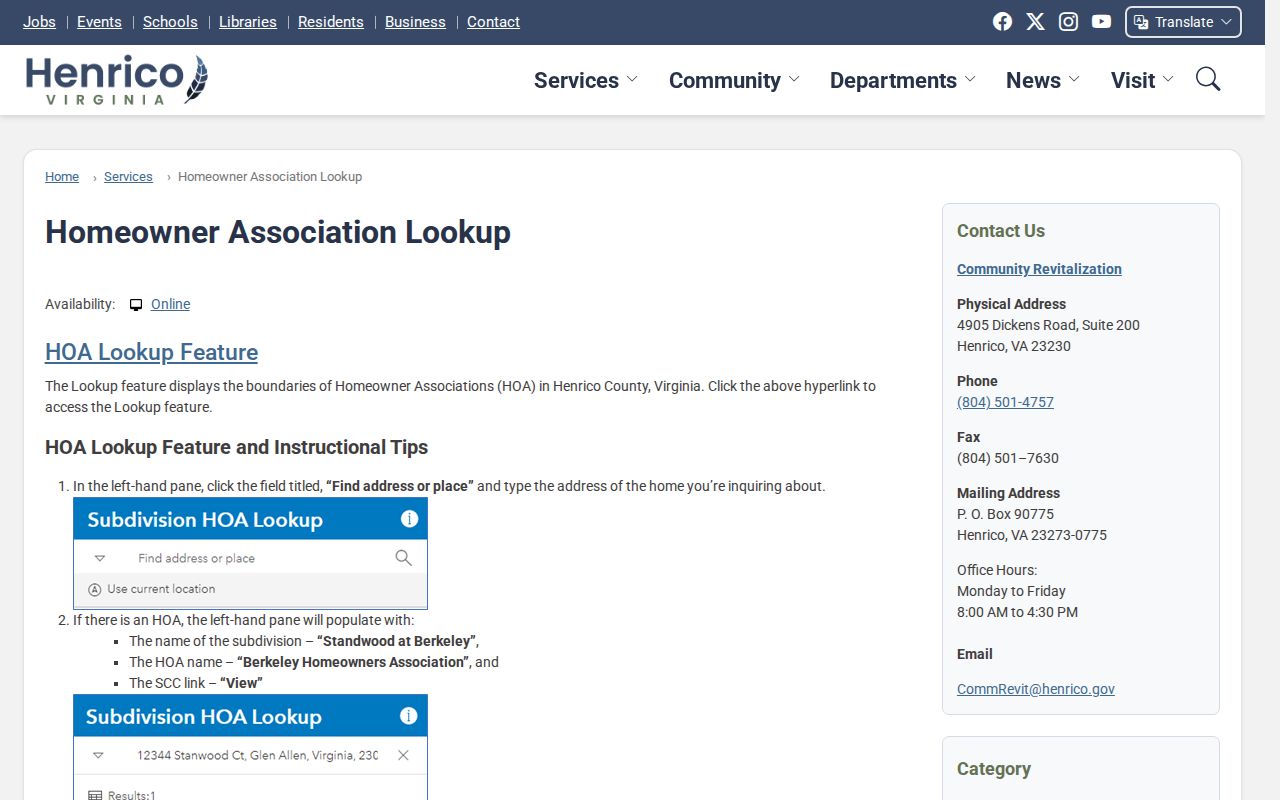
The displayed association name and outline serve as a starting lead for the block. They set no legal boundary and name no one. The annual Henrico Directory of Organizations offers dated leads on civic, homeowner, neighborhood, historical, and cultural groups. The county warns contacts can go stale. Trust the publication year. Verify through the official route, and never reproduce private contact details from the directory.
| Foxhall HOA | Listed as an association lead in the county directory; confirm an address through the HOA map, then confirm the entity through SCC. |
|---|---|
| Harvie Court Neighborhood Watch | Listed as a community lead; use the county directory’s year and verify current organization identity through the county or SCC route. |
| Monumental Floral Gardens | Association source with published neighborhood-boundary context; treat it as local context, then confirm any entity detail through SCC. |
Declarations, covenants, and deeds live elsewhere. The Circuit Court Clerk’s Land Records room holds them. A copy request needs the exact association name plus a book and page. Copies run $0.50 per page, and a map outline still proves nothing about a legal property boundary.
Henrico County Block History Clues
Older Henrico County blocks leave paper trails. You can trace one without assembling a roster of who lives there now. The Build Henrico search guide covers permits filed after August 30, 2021. The search accepts several criteria. Address, date, applicant, and even partial entries work. Results tabs labeled Details, Processes, and Referrals exist. They can lay out a review chronology for a single permit. Keep the record's meaning in perspective, though. A permit marks construction or alteration work. It proves nothing about title transfer or who occupies the house today.
When a defined record is needed and a search returns nothing, the Building Inspections request form can pursue an open permit, permit copy, inspection report, construction date, plans, site plan, code-violation material, or certificate of occupancy. Residential plans open up only 10 years after construction. Request a specific existing record by address, GPIN, permit number, or date range.
For deeper history, the greater-Richmond directory street sections start with 1879/80. Pair a street-section clue with the name section, the directory year, a census page, newspapers, deeds, or permits. A directory entry is an historical clue. It is not recorded title. It does not prove a household occupied that address every day of that year.
Henrico County Community Record Check
Once the HOA map points to an organization, the Virginia SCC Clerk Information System is the natural next stop. Search by entity name or entity ID. Then compare entity type, status, formation date, registered agent, registered office, principal office, and filings. A registered office is simply an organization record. It is not a tool for identifying or contacting the people who live nearby. The SCC landing page shows the state entity-search route. It is used to confirm a mapped Henrico County association.
Match the entity ID and status before drawing conclusions. That simple comparison keeps a similarly named group from being mistaken for the association tied to the mapped subdivision.
Henrico County Neighbor Tool Comparison
Official records keep their purpose and their limits. Commercial neighbor tools, unnamed here, may stitch together old addresses and contacts. They may also pull household claims from many sources. None of that replaces the county or state custodian of the record. The comparison keeps a Henrico County block search anchored to records you can actually check.
| Official Henrico and Virginia route | Unverified commercial neighbor tool category |
|---|---|
| Shows a defined record type, such as a parcel polygon, deed index, voter-status route, or entity filing. | May merge data of different dates and purposes without a clear custodian. |
| Lets a researcher preserve the source date, record key, and stated access limit. | May not show which primary record supports a current-looking claim. |
| Routes corrections and copies to a public custodian or issuing agency. | Cannot replace an official parcel, deed, court, voter, or entity verification. |
Henrico County Neighbor Privacy Limits
Henrico County neighbors are not a public list. Never publish protected voter addresses or Address Confidentiality Program addresses. Never publish private mailing or phone details, or a compiled roster of current residents. One street address can hide an owner or a different tax-mail recipient. It can also hold several units, a common area, or no visible resident record at all. Just because a field is public does not make it fit for republication.
Virginia's Address Confidentiality Program gives qualifying participants a designated address and mail forwarding. Participant-identifying records are exempt from FOIA. Voter records, vital records, sealed court records, and certain registry information each carry their own boundaries. County GIS pages likewise describe their maps as reference material without warranty. Treat an absence or a redaction as a privacy or coverage limit. It is not an invitation to bridge the gap through some other source.
Lawful use. Use Henrico County neighbor records for lawful personal, property, family-history, civic, or safety research. Never use them to stalk, harass, intimidate, or harm anyone.