
Henrico County Address Records by Era
The right source depends on the time period and the question. A deed traces a recorded transfer, not necessarily a household. A directory can put a person at an address in a stated year, but it does not establish title or continuous presence. The County's online layers are strongest for a current parcel or recent permit activity. For an older gap, move to the Record Room, library collections, and the Library of Virginia rather than assuming an online screen is complete.
| Source | Years it covers | Where held | What it shows |
|---|---|---|---|
| SRA deed index | Henrico online start date not published | Virginia SRA and Circuit Court Record Room | Recorded parties, transfers, liens, plats, and dates |
| Henrico deed, will, and court reels | Scattered 1650s-1900s runs; will index 1781-1904 | Library of Virginia CCMF VA125 | Older legal names, estates, court material, and land continuity |
| Reverse and street directories | Nearly annual Richmond-area run, 1870 to present; street section from 1879/80 | VMHC, Richmond Public Library, HCPL databases | Name-to-address and address-to-name clues |
| Federal census | Released under the 72-year rule | National Archives and HCPL databases | Published household, age, relationship, street, and birthplace fields |
| Build Henrico records | Online transition after August 30, 2021; earlier material by request | County portal or defined records request | Permits, inspections, plans, and construction milestones |
| Newspapers and obituary indexes | Times-Dispatch card index roughly 1940s-1985; other runs vary | Library of Virginia, Richmond Public Library, Chronicling America | Death notices, moves, legal notices, and community references |
Use the deed route when the goal is a transfer chain. Use directories and census schedules for past residents and household context. Use permits to date a structure or alteration, not to identify a former occupant. Keep the record type separate from the conclusion it can support.
Henrico County Parcel Records Start Point
The first address pass is the Henrico real estate assessment search. Its visible fields include GPIN, PID, Street #, Prefix, Street Name, Unit, Use Code, and Description. Enter the known street components, then save the GPIN or PID and inspect the parcel, subdivision, lot, and legal-description clues through the County's GIS layer. An old street address may be absent from a deed index, so the parcel identifier and legal description become the bridge to an earlier record.
Assessment data and title evidence are different. A tax mailing address can be a contact clue, but it does not prove where a person lived. A map result is also not a recorded transfer. For previous residents research, copy the address form, parcel number, legal description, recording date, instrument number, book and page when shown, grantor, grantee, and source URL into one dated worksheet.
Henrico County Deed Record Chain
Use the Virginia SRA land-records route after the parcel layer supplies a current owner or a usable legal description. Search the current owner as grantee to find the acquisition instrument. Read the seller, prior description, lot or subdivision reference, and document details, then search that seller as grantee for an earlier purchase. A rural tract can become a subdivision, and a parcel can split or merge, so compare the relevant plat and subdivision section at every change.
The Henrico Circuit Court Clerk is the local route for the Record Room and land records.
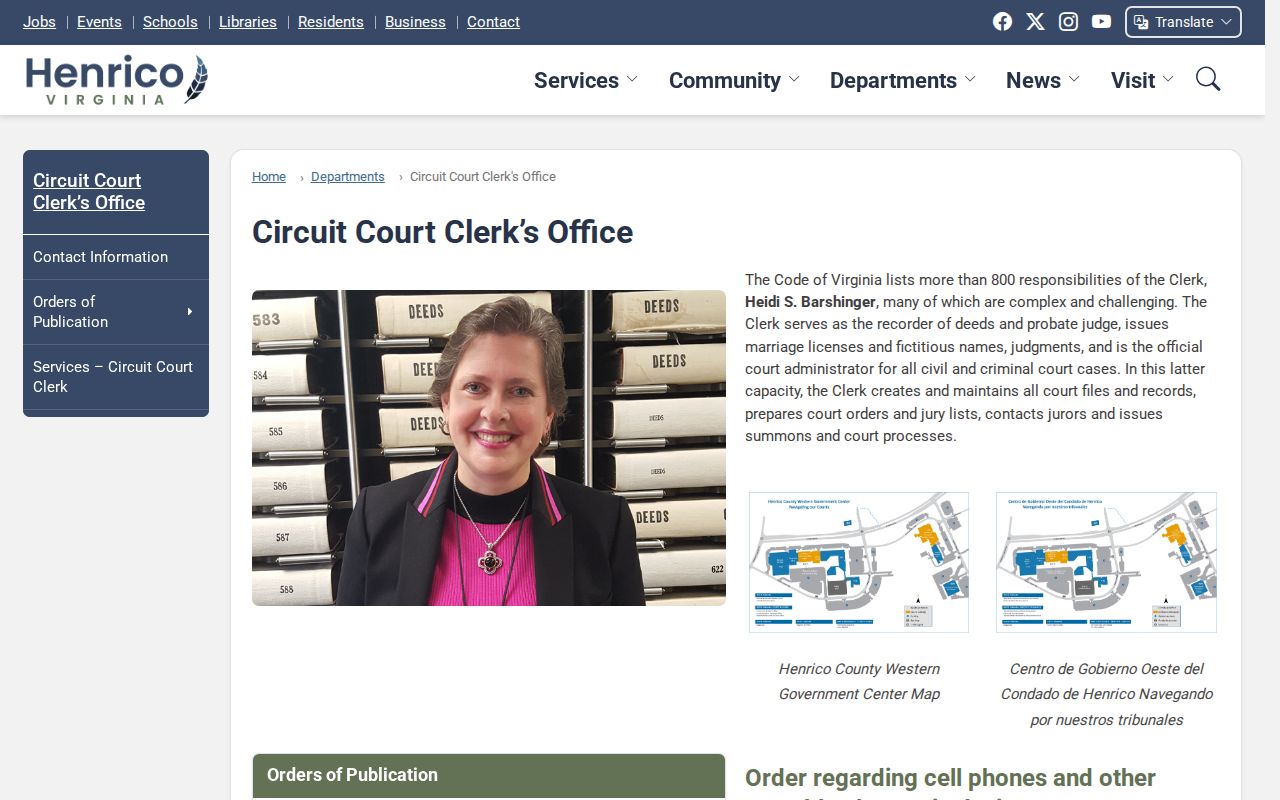
The SRA page does not publish Henrico's exact online index starting year. When the online trail stops, use the Record Room and the Library of Virginia microfilm catalog. The Record Room is open Monday through Friday, 8:00 a.m. to 4:00 p.m., with land-record recording to 3:30 p.m.; copies cost $0.50 per page. Clerk staff do not perform research by telephone, so a caller can seek routing information but should identify the document before ordering copies.
- Search the address in the assessment system and record its GPIN or PID, legal description, and parcel context.
- Search the current owner or entity as a grantee in SRA and obtain the purchase deed or clerk copy.
- Copy the seller, instrument number, book and page if shown, recording date, and exact legal description.
- Search that seller as a grantee to locate the earlier acquisition, then repeat the comparison.
- When the indexing route or description changes, use plats, clerk-held instruments, and LVA microfilm rather than guessing an online cutoff.
- Grantor and grantee
- The grantor transfers an interest in a recorded instrument. The grantee receives that interest.
- Chain of title
- The sequence of recorded transfers used to follow an interest in the same land backward.
- Legal description
- The lot, block, subdivision, acreage, metes-and-bounds, or plat wording that identifies land when a modern street address does not.
Henrico County Address Records and Postal Names
The known 2008 postal-community change is a search caution, not a street renumbering. USPS did not change ZIP codes or delivery routes, Richmond remained an accepted alternate community name for listed Henrico ZIPs, and no formal address-change request was required. A Richmond label on an older or current record therefore does not by itself move a house across a boundary or show that a parcel changed counties.
Search both Henrico and Richmond labels, as well as the neighborhood, subdivision, former road name, and legal description. No countywide street-renumbering or renaming chronology was located in the research, so it would be wrong to invent one. When a numeric address disappears from an older record, test the lot, plat, acreage, road name, and owner trail before declaring it a different place.
Note: Record the exact postal label displayed by each source because a valid Henrico County address may use Richmond as an alternate name.
Henrico County Previous Residents: Directories and Census
Owners are only part of the historical picture. The Richmond and greater-Richmond directory run is documented as nearly annual from 1870 to the present, and its street-address section begins with 1879/80. Search a current street name and number in the reverse section, then search the name section. If the number is missing, test the street alone and nearby cross streets. Early directories can use descriptive locations instead of numbers. The historical shelf and entry-reading method are detailed on the Henrico County city directory collections page.
- Place the directory year beside the address or name hit and retain the volume and page.
- Move through adjacent annual volumes, allowing for initials, spouse notations, and Richmond or Henrico labels.
- Pair the closest available federal census release with the directory year to compare published household details.
- Use an obituary, probate record, deed, or permit to test a disappearance, move, death, or property transfer.
Census schedules provide useful published context, including relationships, ages, birthplace fields, streets, and enumeration districts. They are anchors under the 72-year release rule, not proof that every directory year held the same household. A directory presence can show association in a year. It cannot alone settle ownership or full-time residence.
Henrico County Record-Loss Myth
Myth: a blank search proves no record ever existed. The Library of Virginia warns that all court records before 1655 and almost all court records before 1677 are missing. British Revolutionary War actions destroyed records, and the 1865 fire destroyed almost all circuit-court records. A missing deed, will, or court hit can therefore reflect loss rather than a person's absence. Look for surviving land grants, tithe lists, church registers, probate, newspapers, and records from nearby counties or cities.
The Library of Virginia Henrico microfilm catalog is the older-record fallback for deeds, court books, wills, plats, roads, and administrative material.
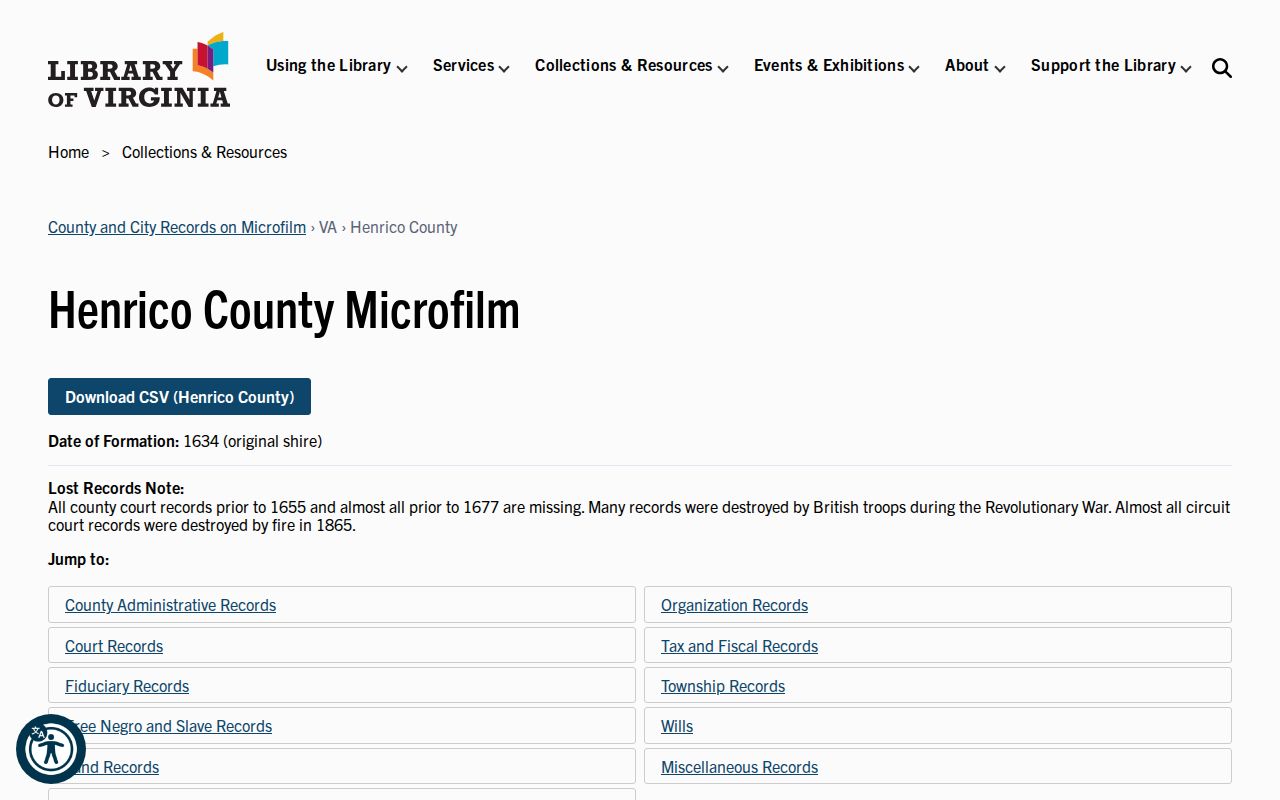
The catalog lists scattered deed and court runs from the 1650s forward, plat books from 1805 or 1810 through the late nineteenth century, a general will index for 1781-1904, and will books from 1858-1903. These holdings need volume, reel, and page notes to become usable evidence.
The Henrico Historical Society genealogy resource provides appointment-based referrals, cemetery material, tithe-list information, and record-book references.
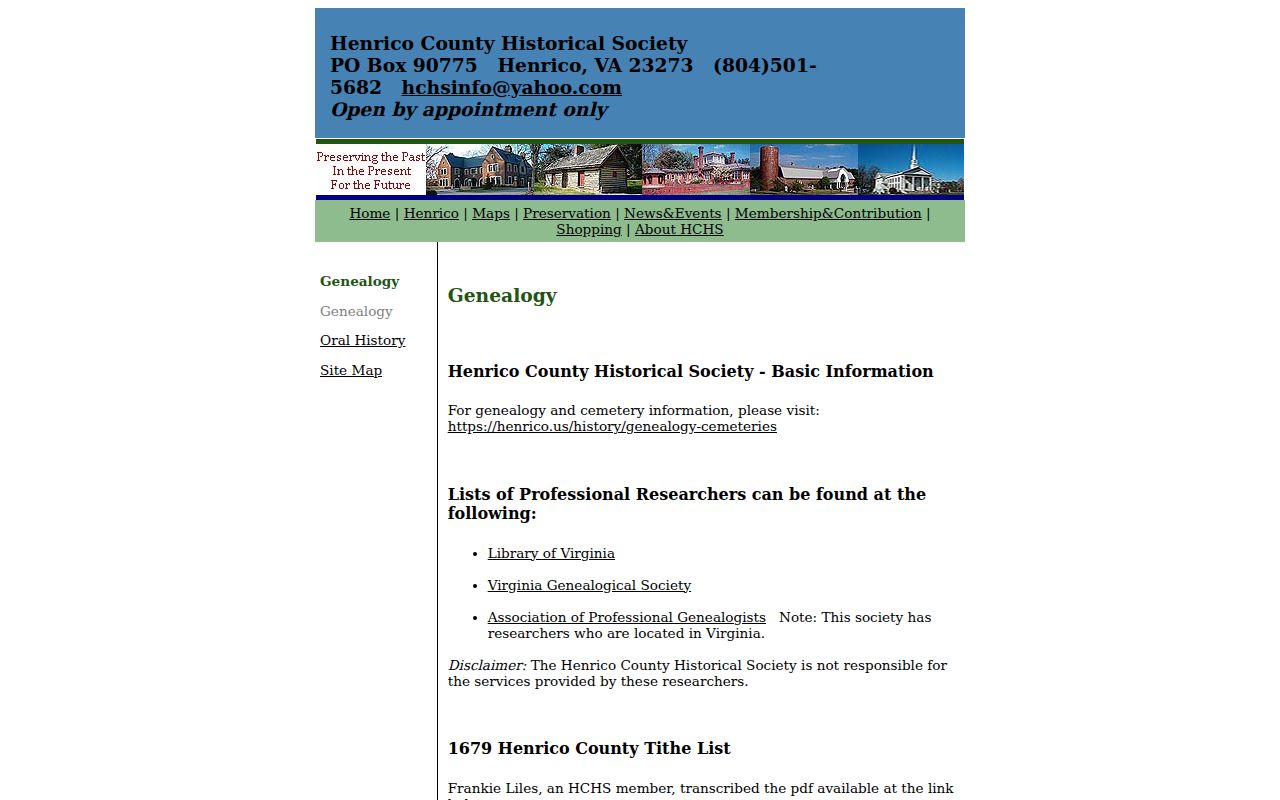
Its 1679 tithe-list transcription can place taxable households in local geography, but it does not have a modern GIS address precision. Pair it with land grants, early deed books, and later directories.
Henrico County Permit Records for House History
Build Henrico can contribute a building timeline. The clearest verified online layer follows the August 30, 2021 transition; earlier material may be sought through a defined building-record request. The available record types can include permits, inspection reports, certificates of occupancy, plans, site plans, construction dates, and open permits, subject to the plan-age rule. Monthly public-data permit sheets also provide recent address-level context, although the exact archive span was not confirmed.
Use a permit date to show when a structure appeared, changed, or received an inspection. It is not a title transfer and should not be treated as proof of a past household. Henrico announced in April 2026 that the Build Henrico sign-in would change to a one-time email passcode, so the current sign-in route should be verified before using that portal. When a request is needed, ask for an existing, defined record using the address, date range, permit number, GPIN, or record type.
Henrico County Past Residents at Trail Endpoints
When a directory listing ends, look for a dated explanation rather than assuming one. Library of Virginia and Richmond Public Library newspaper resources can reveal an obituary, announcement, biography, or legal notice. The Richmond Times-Dispatch card index covers roughly the 1940s through 1985. A later probate record can identify an estate, executor, heirs, or address. A death certificate supports death facts, but it does not transfer property. A will can name property, while a deed or probate order is needed to connect that fact to a particular parcel.
Lawful use. Research on Henrico County past residents is appropriate for family history, house history, estate questions, and personal curiosity. Do not use names or address details to track, harass, or harm a living person.
Preserve the source date and whether the evidence is a directory listing, census record, recorded instrument, map reference, or newspaper item. That simple distinction keeps a house-history trail honest when different records point to different parts of the same story.